
TerawattScale
How to build AI data centers that work for industry, communities and the climate.
NOVEMBER 2026
Brook Porter, Jake Tauscher and Julia O’Donnell
Data centers are unpopular, and it showed in the midterms
Americans who oppose a data center near their home
strongly oppose somewhat oppose
Seats that flipped
56% is the NBC exit poll (AI ranked 10th of 11 issues).
of 383 GW planned (41%) sits where the new governor backs a pause.
Of the rest: 18% new rules, no pause · 30% no governor race · 10% little signal.
Texas: who decides
Texas · 88.4 GW, more than half the exposed capacity
Governor-elect Gina Hinojosa (D) can only ask. Abbott’s appointees decide.
Sources
What industry needs, what communities deserve
What industry needs
- Speed to power
- Scale
- Uptime
See the largest buildout in history
Data centers are already being built at a pace and scale unlike any infrastructure wave in history.
Infrastructure-wave spending as charted in the paper; AI buildout through 2030.
What communities deserve
- Lower prices
- No pollution
- Tax revenue
See who is paying
This boom is being financed by the richest companies in history. Companies with these resources can afford to build well. There is no financial reason for a community to bear the cost of a data center.
Market values Oct 2-5, 2026, and hyperscaler capex, as charted in the paper.
Sources
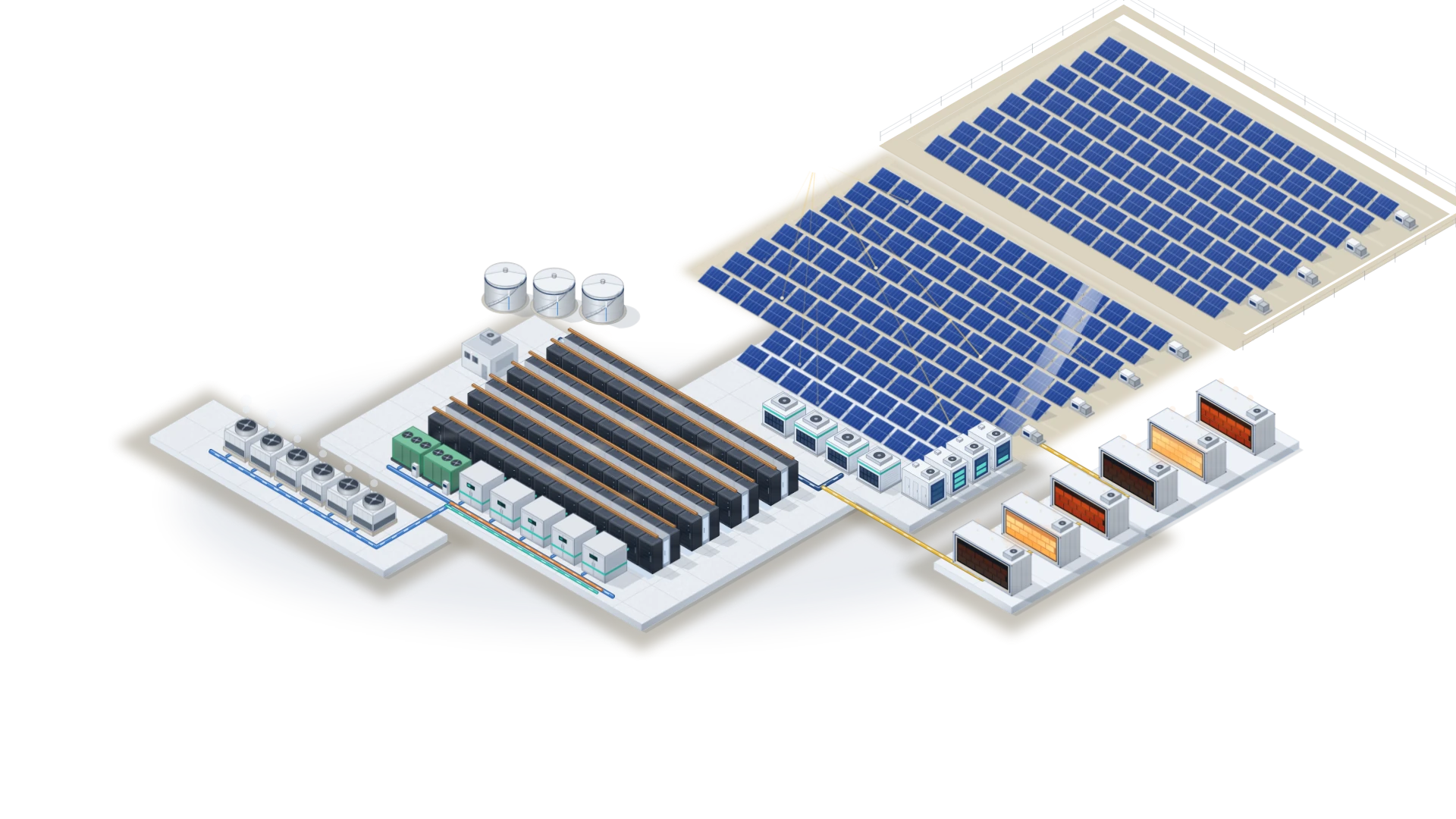
Three waves of data center power
Grid connected
Build wherever you can plug in. Speed over everything.
Bring your own power
Gas turbines get sites online fast. Bandaid solution.
Scaled and sustainable
Grid connected
Gas turbines and batteries on site
VAST storage
Liquid cooling
Waste heat recovery
Autonomous construction
Off-grid, efficient and green
Renewables are the cheapest and most scalable form of power
Cheapest new electricity
Unsubsidized LCOE, $/MWh, 2025
Solar fell 84% in sixteen years, from $359 in 2009 to $58: from the most expensive source to the cheapest.
Still 5x gas after adjusting for capacity factor
Annual manufacturing capacity, GW, 2025
Sources
Intermittent renewables cannot serve data centers alone, and firming with li-ion is too expensive
Up-front cost to firm a 1 GW AI campus with solar + Li-ion
Sources
Long-duration energy storage is scaling now
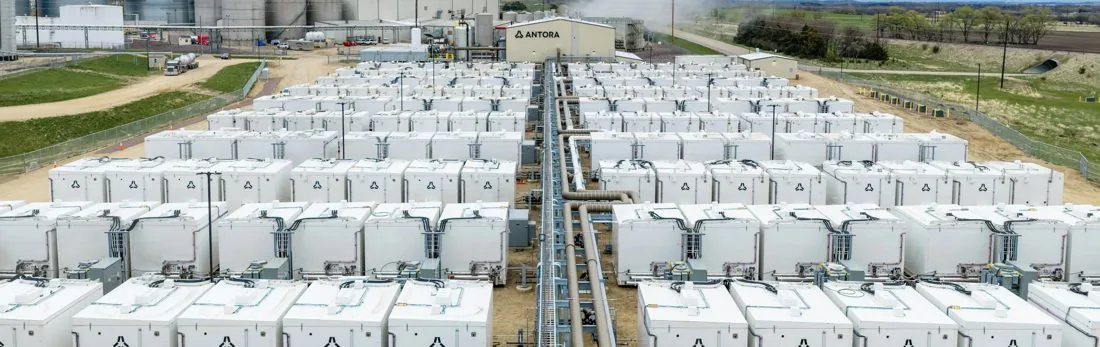 Commercial scale

Heated carbon blocks
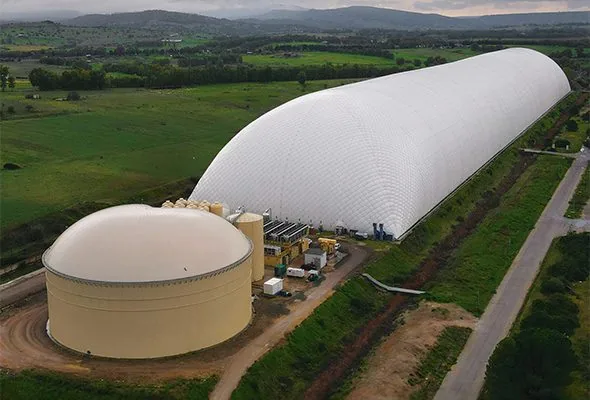 Commercial scale

Compressed carbon dioxide
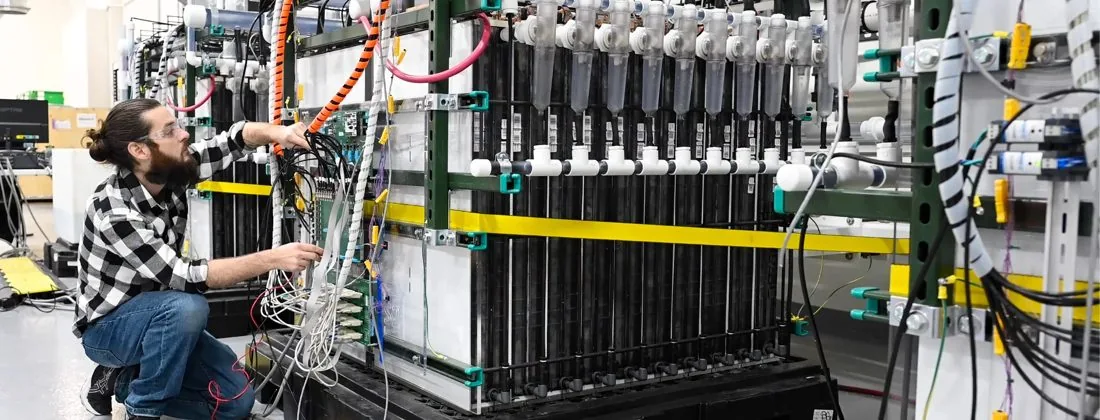 Pilot scale

Iron-air batteries
Sources
Solar and LDES is the fastest, most scalable, and most cost effective option for data center builders
Renewables + LDES
Why it leads
- Speed: solar goes from groundbreaking to power in 12 to 16 months, the most impressive record of execution at speed today.
- Scale: ~1,400 GW of solar modules a year, 5x gas even after discounting for intermittency; wind adds 165 GW globally.
- Cost: ~$0.10/kWh firm now, with potential for ~$0.05/kWh at terawatt scale, which no other option can achieve.
- Maturity: solar and wind with storage are among the four proven options; Antora and Energy Dome are at commercial scale.
Natural gas (BTM)
Where gas falls short
- Speed: the table rates gas yellow (2 to 5 years); the text gives turbine lead times of five or more years.
- Scale: 60-70 GW of turbines a year, ~100 GW by 2030; gas supply growth powers only ~10 GW of data centers annually.
- Cost: comparable at ~$0.10/kWh firm over the medium term, but not on a cost curve like solar and storage.
- Maturity: proven, one of the four options that rise above the rest; also the main source of pollution and noise communities fight.
Grid: giga-scale
Firm grid power at scale
- Speed: slowest for large pockets of firm power; median 61 months from interconnection request for projects online in 2025.
- That wait was 22 months in 2008 (LBNL, Queued Up 2026).
- Scale: interconnection queues stretch five years or more; the grid has run out of firm, industrial scale power.
- One operator told us firm power from the grid is infinitely expensive and unavailable.
- Maturity: proven; we expect most behind-the-meter sites to connect eventually, build first, interconnect second.
Grid: medium-scale, flexible
Modest allocations, own capacity
- Speed: operators are finding more modest grid allocations, particularly when the data center brings its own capacity; named in the speed verdict.
- Scale: suits smaller, often modular, data centers slotting into available interconnections, not giga-scale sites.
- Cost: comparable at ~$0.10/kWh firm; named in the cost verdict alongside solar and LDES.
- Capacity options: compute flexibility, virtual power plants, on-site or near-site batteries; gas peakers are expensive, backlogged, hard to permit.
Geothermal
Years from gigawatt scale
- Maturity: next-generation geothermal is being proven in the field now.
- Scale: can supply power where the geology allows, but is years from gigawatt-scale deployment.
- Belongs in the long-term mix; will not carry the next 100 GW.
Nuclear fission
First units at decade's end
- Maturity: still being developed in its new small and advanced forms, with many shots on goal.
- Speed: the first commercial units are expected around the end of the decade.
- Belongs in the long-term mix; will not carry the next 100 GW.
Nuclear fusion
Not ready for this wave
- Maturity: promising, but will not be ready for this wave.
- Belongs in the long-term mix; will not carry the next 100 GW.
Wave power
No economical demonstration yet
- Maturity: ocean or wave power has yet to demonstrate economical potential, even at demonstration scale.
- Belongs in the long-term mix; will not carry the next 100 GW.
Orbital data centers
Compelling, with open questions
- Space-based solar has compelling characteristics: no land use, modular scalability, cheap energy and cooling.
- Near-term challenges: launch cost and launch capacity, although SpaceX is moving quickly.
- Outstanding questions on orbital compute hardware; will not carry the next 100 GW.
Tap any option for why it scores that way.
Sources
This is also the best solution for the climate
US greenhouse gas emissions, Gt CO2e a year
Shaded: 2026 to 2035, G2 estimates.
Why the paths split
Twenty years of progress
- The US cut emissions by about 1 Gt over 20 years; the power sector drove 80% of that (Rhodium Group, Jan 2026).
- Major contributions came from the scaling of renewable energy.
- That progress came in a world of stable power demand; that has now changed.
Current path, mostly gas
- We estimate that on its current path, building mostly natural gas, the US reaches almost 7 Gt of emissions by 2035 (G2 estimate).
- The climate needs power that does not lock in another thirty years of combustion.
- How the US builds data centers over the next 10 years will be the single most significant determinant of our climate trajectory.
Clean buildout keeps emissions falling
- Data centers built with clean technologies let the US keep dropping emissions while scaling clean energy and leading in AI (G2 estimate).
- Solar backed by long-duration storage with full redundancy is also the cleanest and most cost-effective path.
- Designed right, the firming reserve runs only a few hours a year, minimizing emissions.
Sources
Cost-effective power at speed and scale; climate and community friendly
Solar + long-duration storage
Full redundancy. The fastest, most scalable, cleanest and most cost-effective path.
- Power in 12 to 16 months
- ~$0.10/kWh firm now, ~$0.05 at terawatt scale
Flexible grid
Slot into available grid interconnections and bring their own capacity.
- Grid assets, not liabilities
- Batteries, community DERs, compute orchestration; not gas peakers
Sources
Want the full analysis?
Read the complete Terawatt Scale paper, with the data and sources behind every chart.
Read the full white paper ›Best on a laptop, or with your phone turned sideways.